
2026 Midterms · U.S. House · California Safe R
California — 40th District
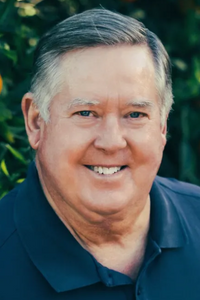
Republican
Young Kim
Incumbent
Following mid-decade redistricting under Proposition 50, Republican incumbents Ken Calvert and Young Kim were drawn into California's 40th Congressional District and face each other in the 2026 general election. Both candidates defeated six other primary challengers on June 2, 2026, to advance to the top-two matchup. The contest hinges on incumbent track records, alignment with Donald Trump's America First agenda, and local standing in a newly redrawn district where Calvert previously represented 51% and Kim represented 35%. Major race rating outlets classify the seat as Solid or Safe Republican.
The pulse
updated Sep 16Border security and immigration
high salienceWhile both nominees condemn open borders and support Donald Trump's border agenda, Calvert highlights his authoring of E-Verify and specific legislative mandates, whereas Kim frames her stance as part of reversing Democratic administration policies.
Republican Ken Calvert
Supports strict border security and E-Verify
Calvert argues that securing the border must happen before any broader immigration reform and opposes amnesty or fast passes for illegal entrants. He authored the federal E-Verify program and advocates for codifying Remain in Mexico, ending catch and release, and prioritizing the deportation of criminal illegal immigrants.
- Authored the federal E-Verify employee legal status verification system.
- Demands border security prior to considering immigration reform, strongly opposing amnesty.
- Advocates for codifying Remain in Mexico, ending catch and release, and deporting criminal illegal immigrants.
“There can be no discussion of immigration reform until we’ve secured our border. Period.”
“I support a system that rewards those who follow the rules and wait their turn, not one that gives a “fast pass” or grants “amnesty” to those who cut in line.”
Republican Young Kim
Opposes open borders and supports Trump
Kim opposes open border policies associated with the Biden-Pelosi administration and pledges to work with Donald Trump to secure the border. She positions border enforcement as critical to protecting working families and law and order.
- Opposes open border policies associated with the Biden-Pelosi agenda.
- Pledges to partner with President Donald Trump to secure the border and protect national security.
“In Congress, I continue to fight every day to ensure President Trump has allies to undo the disastrous Joe Biden-Nancy Pelosi agenda that caused skyrocketing prices, rising crime, an open border, and a political class that serves the swamp instead of fighting for working families.”
Cost of living and tax policy
high salienceCalvert points to direct tax legislation such as quadrupling the SALT deduction, while Kim emphasizes her career-long opposition to Democratic tax increases.
Republican Ken Calvert
Supports tax cuts and lower energy costs
Calvert focuses on lowering living costs for Californians through federal tax relief and energy deregulation. He highlights expanding the State and Local Tax (SALT) deduction in the Working Families Tax Cuts and opposes state cap-and-trade programs that raise gas prices.
- Worked to quadruple the State and Local Tax (SALT) deduction in the Working Families Tax Cuts, saving families an average of $4,300 annually.
- Opposes Gavin Newsom's cap-and-trade policies and high state gas taxes to lower energy costs.
- Earned top ratings from tax and business groups like Americans for Tax Reform and NFIB.
“I was proud to work with President Trump to quadruple the State and Local Tax deduction in the Working Families Tax Cuts, which will save Californians an average of $4,300 a year.”
“Equally important is making life more affordable for California families. Californians pay more for gas, groceries, energy, insurance, and housing than just about anyone on the planet while also paying some of the highest taxes in the country.”
Republican Young Kim
Opposes tax increases and inflation
Kim campaigns on opposing tax-and-spend agendas that fuel inflation and increase prices for working families. She highlights her legislative record in Sacramento and Washington standing against tax increases and fees.
- Opposed Democratic tax and fee increases in the California State Assembly.
- Focuses on stopping inflation caused by federal spending and Democratic economic agendas.
- Endorsed by fiscal advocacy groups including Americans for Prosperity Action.
“I fought tax-and-spend Democrats who wanted to increase taxes and fees to pay for their extreme agendas...”
Public safety and crime
high salienceCalvert advocates federal conditions on grant money for sanctuary jurisdictions and federal prosecutor interventions, whereas Kim emphasizes her legislative voting record in Sacramento against soft-on-crime policies.
Republican Ken Calvert
Supports strict crime penalties and sanctuary defunding
Calvert advocates withholding federal funding from jurisdictions that enforce sanctuary policies or cashless bail. He supported Proposition 36 to heighten penalties for drug and theft crimes and favors giving federal prosecutors power to intervene when local DAs refuse to prosecute.
- Proposes withholding federal funding from cities with sanctuary state policies or cashless bail.
- Supported California Proposition 36 (2024) to increase theft and drug penalties.
- Supports empowering federal prosecutors to intervene when local progressive DAs fail to act.
“Federal funding should be contingent on jurisdictions eliminating sanctuary state policies, cashless bail and other pro-criminal policies that have put families at risk.”
Republican Young Kim
Supports law enforcement and victim rights
Kim campaigns on restoring law and order by cracking down on soft-on-crime state measures. She highlights her record in the State Assembly standing up for domestic violence victims and supporting law enforcement.
- Opposed soft-on-crime legislation in the California State Assembly that allowed dangerous criminals in communities.
- Supported resources for victims of domestic violence, homeless children, and veterans.
- Pledges to stand with Trump to restore law and order in local communities.
“...took on soft-on-crime politicians who allowed dangerous criminals to remain in our communities, stood up for victims of domestic violence, and secured valuable resources for veterans and homeless children.”
Defense and foreign policy
medium salienceCalvert leverages his role as Defense Appropriations Chair to articulate detailed military and war powers positions, whereas Kim frames national security within a broader America First framework.
Republican Ken Calvert
Supports military spending and presidential war authority
As Chairman of the House Appropriations Subcommittee on Defense, Calvert advocates robust military investment into lethal technologies while eliminating DEI programs. He supports executive war power flexibility under the War Powers Act of 1973 and 2002 AUMF.
- Serves as Chairman of the House Appropriations Subcommittee on Defense.
- Directs defense spending toward battlefield technologies while eliminating DEI programs.
- Supports presidential war powers flexibility under Article II, the War Powers Act, and the 2002 AUMF.
“We aren’t just cutting blank checks, but rather we are focusing our investments into the technologies and weapons systems that will provide our troops with an advantage on the battlefield. We are ending woke and DEI programs that do nothing to support our warfighters.”
Republican Young Kim
Supports strengthening national security
Kim advocates standing with Donald Trump to advance an America First agenda that strengthens national defense and national security.
- Pledges to advance an America First agenda focused on national defense.
“I'm running because California needs proven fighters who will stand with President Trump to advance a bold America First agenda that restores law and order in our communities, strengthens our national security, and protects the American Dream for future generations.”
Election integrity and voting laws
medium salienceCalvert takes an active leadership stance on federal voter ID laws and proof-of-citizenship mandates, whereas Kim has no detailed voting rights proposals in the sources.
Republican Ken Calvert
Supports SAVE America Act and voter ID
Calvert prioritizes election security by championing the federal SAVE America Act and supporting California's Proposition 39 voter ID initiative. He argues proof of citizenship and photo ID are standard requirements for election integrity.
- Co-leading efforts in Congress to pass the SAVE America Act requiring proof of citizenship and photo ID to vote.
- Part of a leadership coalition supporting California Proposition 39 (voter ID initiative).
- Voted against certifying electoral votes from Arizona and Pennsylvania on January 6, 2021.
“Just like President Trump, I believe one of the most pressing issues right now is passing the SAVE America Act to protect our elections. Requiring proof of citizenship and a photo ID to vote is just common sense.”
“Proof of citizenship and proof of ID to vote are just common sense. If even Mexico and Somalia can require voter ID, then so too can the United States of America.”
Energy, environment, and disaster response
medium salienceCalvert outlines explicit opposition to state carbon regulations alongside support for forest management and water storage, while Kim's environmental platform is not detailed in the sources.
Republican Ken Calvert
Supports fossil fuels and forest management
Calvert opposes carbon emission regulations, EV mandates, and mileage taxes, favoring infrastructure, water storage, and active forest management. He secured C-130H firefighting supertankers and authored federal wildfire legislation including the EMBER Act and Fix Our Forests Act.
- Opposes California bans on gasoline-powered vehicles and mileage-based commute taxes.
- Supports EPA's Clean Diesel program to replace older engines instead of imposing carbon regulations.
- Pushed federal wildfire legislation (EMBER Act, Fix Our Forests Act) and delivered seven C-130H firefighting supertankers to CAL-FIRE.
“I do not support costly carbon regulations because Californians already pay the highest gas prices in the country. The last thing we need is new regulations that would raise the cost of gas even higher.”
Congressional ethics and reform
low salienceCalvert explicitly supports a congressional stock trading ban while opposing term limits, whereas Kim's positions on congressional reform are not documented in the sources.
Republican Ken Calvert
Supports stock trading ban; opposes term limits
Calvert supports banning members of Congress and their families from buying or selling individual stocks, stating he has never traded stocks while in office. However, he opposes congressional term limits, arguing that voters decide limits at the ballot box every two years.
- Supports banning lawmakers and their families from trading individual stocks.
- Has never traded individual stocks since being elected to Congress.
- Opposes congressional term limits, favoring voter choice every two years.
“Members of Congress are there to serve the people, not to get rich like Nancy Pelosi, buying and trading stocks on insider information. I have never traded individual stocks since being elected to serve in Congress.”
“The best term limits are the ones voters can choose for themselves at the ballot box every two years.”
Prediction markets 1
updated Sep 16Kalshi ↗
CA-40 House winner?
Prices are the market's latest daily close, expressed as an implied win probability. Follow a source link for live prices and volume.
Social media regulations
low salienceCalvert outlines a position favoring parental tools over federal social media age bans, whereas Kim has no documented position on the issue.
R Republican Ken Calvert
Opposes youth bans; supports parental controls
Calvert opposes federal age bans on youth social media use, characterizing them as nanny state overreach. Instead, he supports holding social media companies accountable and giving parents tools to control content and screen time.