
2026 Midterms · U.S. House · California Safe D
California — 17th District
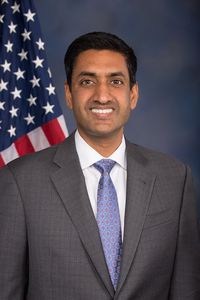
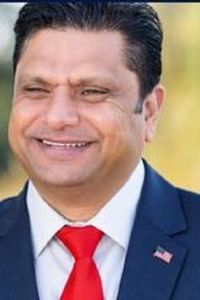
California's 17th Congressional District general election features incumbent Democratic Representative Ro Khanna facing Republican challenger Ritesh Tandon in a repeat of previous election matchups. Located in Silicon Valley, the race hinges on economic competitiveness, artificial intelligence education and tech policy, high cost of living, immigration enforcement, and educational merit versus affirmative action. Major election forecasters including Cook Political Report, Inside Elections, Sabato's Crystal Ball, and DDHQ/The Hill rate the district as Solid Democratic or Safe Democratic. Khanna has served since 2017 and holds a massive campaign funding advantage, while Tandon campaigns on middle-class affordability, border security, and government ethics reform.
The pulse
updated Sep 16Economy & Cost of Living
high salienceKhanna advocates for public investments in manufacturing, vocational training, and wealth taxes on billionaires, whereas Tandon pushes for tax cuts, federal deregulation, and explicit opposition to state wealth and mileage taxes.
Democratic Ro Khanna
Supports middle-class investments and manufacturing
Khanna focuses on building a strong 21st-century economy by promoting domestic manufacturing, green energy industries, and worker protections. He supports expanding vocational training and apprenticeship programs to help working families achieve financial security. He also endorsed California Proposition 40, a proposed wealth tax on billionaires to fund state programs.
- Supports creating technology and manufacturing jobs across America.
- Endorsed California Proposition 40, a one-time wealth tax for state-funded healthcare, education, and food assistance.
- Promotes apprenticeships and vocational training alongside traditional higher education pathways.
“Promoting economic competitiveness and opportunity in the 21st century must be America’s top priority.”
Republican Ritesh Tandon
Supports tax cuts and deregulation
Tandon emphasizes an affordability agenda aimed at cutting living costs, simplifying small business taxes, and reducing federal regulatory burdens. He strongly opposes new state taxes, including California's proposed billionaire wealth tax and car mileage tax, arguing they hurt working families and drive job creators out of state.
- Enact middle-class tax relief and simplify small business tax compliance.
- Implement a One-In, Two-Out federal regulation rule to reduce bureaucracy.
- Oppose California's proposed billionaire wealth tax and car mileage tax.
“CA-17 families are squeezed by rent, gas, groceries, and healthcare.”
“Oppose a California billionaire wealth tax that risks driving investment, founders, and job creators out of the state.”
Education & Merit-Based Admissions
high salienceKhanna supports affirmative action in admissions and debt-free public higher education, while Tandon opposes race-conscious considerations, demanding merit-based standards and universal school choice.
Democratic Ro Khanna
Supports affirmative action and debt-free college
Khanna prioritizes making higher education affordable, promoting debt-free college options, and expanding STEM education. He supported California Proposition 16 to repeal Proposition 209 and restore affirmative action policies in public university admissions and government contracting.
- Advocates for debt-free college and affordable higher education.
- Supported Proposition 16 to allow affirmative action in California public education and hiring.
- Endorsed initiatives requiring personal finance courses in high schools.
“every single Californian stands to benefit from affirmative action and equal opportunity programs”
Republican Ritesh Tandon
Supports merit-based admissions and school choice
Tandon champions merit-based educational admissions and actively opposes race-conscious policies like California's ACA 5/Prop 16 and ACA 7. He supports school choice policies where public tax dollars follow students to public, charter, or private schools, alongside integrating AI literacy into K-12 and college curricula.
- Opposes ACA 7 and affirmative action, advocating for strict merit-based admissions.
- Supports school choice policies, allowing education funds to follow students to public, charter, or private options.
- Proposes a national plan to integrate AI literacy into K-12 standards and college majors.
“VOTE NO on ACA 7 — it strips Prop 209's equal-treatment protections from K-12 AND college programs, reopening the door to race-based treatment.”
“Every child deserves to be judged on merit.”
Immigration & Border Security
high salienceKhanna opposes restrictive border and voter verification legislation in favor of comprehensive reform, whereas Tandon demands physical border barriers, Voter ID enforcement, and merit-based high-skill visa reform.
Democratic Ro Khanna
Supports comprehensive reform and immigrant integration
Khanna views immigrants as central to Silicon Valley's innovation ecosystem and advocates for comprehensive immigration reform. In Congress, he voted against conservative immigration enforcement measures such as the SAVE Act, the Laken Riley Act, and DUI-based deportation expansion.
- Voted Nay on the SAVE Act (H.R. 22) requiring documentary proof of citizenship to register to vote.
- Voted Nay on the Laken Riley Act (S. 5) mandating DHS detention for certain non-citizens.
- Voted Nay on H.R. 875 making driving under the influence grounds for deportation.
“Immigrants have been essential to Silicon Valley’s innovative and meritocratic ethos.”
Republican Ritesh Tandon
Supports border security and illegal immigration crackdown
Tandon calls for strict border security, ending catch-and-release, expanding entry-exit tracking systems, and enforcing Voter ID to ensure only citizens vote. Simultaneously, he advocates for modernizing merit-based legal immigration for high-skilled tech workers while eliminating country-based green card caps.
- Fully fund border security technology, physical barriers, and anti-cartel operations while ending catch-and-release.
- Enforce Voter ID and citizenship verification standards for federal elections.
- Modernize high-skilled legal immigration (H-1B) while eliminating country-specific green card limits.
“Secure the border with modern technology, anti-cartel ops, and rapid processing. End catch-and-release.”
“Enforce Voter ID — only American citizens decide American elections.”
Healthcare
high salienceKhanna champions government-funded Medicare for All and universal coverage, while Tandon rejects single-payer models in favor of market-driven price transparency and drug importation.
Democratic Ro Khanna
Supports Universal Healthcare and Medicare for All
Khanna is a leading advocate for universal healthcare coverage, including Medicare for All, to lower prescription drug costs and guarantee care for every resident. He supports protecting and expanding Medicare and Social Security benefits.
- Supports Medicare for All and universal single-payer healthcare legislation.
- Advocates for expanding Social Security and Medicare benefits.
- Focuses on lowering prescription drug prices and expanding access to primary care.
“Providing Healthcare for All”
Republican Ritesh Tandon
Supports market competition and drug price transparency
Tandon opposes single-payer systems like Medicare for All as unworkable and expensive, proposing instead market-driven reforms to lower costs. His agenda includes price transparency for hospitals and insurers, allowing drug imports from abroad, and expanding tax incentives for primary care clinics.
- Opposes Medicare for All, calling it an unfunded pipe dream that eliminates health choices.
- Proposes allowing drug imports sold abroad by US companies and requiring price publication by insurers.
- Supports tax incentives for small primary care clinics to reduce overhead hospital costs.
“Lower healthcare and Rx costs through price transparency and preventive care.”
“All it will do is to increase costs, decline healthcare quality substantially, reduce health innovation, and take choices away from you.”
Government Reform & Ethics
medium salienceKhanna focuses ethics reform on rejecting corporate PAC and lobbyist donations, while Tandon emphasizes mandatory term limits and banning member stock trading.
Democratic Ro Khanna
Supports banning PAC/lobbyist money and ethics reform
Khanna makes political reform a core pillar of his platform, refusing money from corporate PACs and lobbyist groups. He supports legislative transparency and voted in favor of government accountability measures such as the Epstein Files Transparency Act.
- Refuses donations from political action committees (PACs) and registered lobbyists.
- Voted Yea on the Epstein Files Transparency Act (H.R. 4405).
- Advocates for improving government efficiency, transparency, and responsiveness.
“Banning PAC & Lobbyist Money”
Republican Ritesh Tandon
Supports congressional term limits and stock trading bans
Tandon pushes for anti-corruption reform in Washington, including an eight-year term limit for members of Congress and a complete ban on Congressional stock trading. He pledges to read every bill before voting and cut $1 trillion in federal waste and bureaucracy.
- Pledges to support 8-year term limits for members of Congress.
- Advocates for a total ban on Congressional stock trading.
- Commits to reading every bill in its entirety prior to casting a vote.
“STOP CORRUPTION IN WASHINGTON: 8-year term limits, ban Congressional stock trading, read every bill before voting.”
Environment & Energy
medium salienceKhanna promotes Green New Deal policies and zero-emission subsidies, whereas Tandon rejects Green New Deal targets in favor of an all-of-the-above energy model including nuclear and natural gas.
Democratic Ro Khanna
Supports clean technology investment and Green New Deal initiatives
Khanna advocates for aggressive environmental protections, clean energy investments, and climate legislation like the Green New Deal. He endorsed state measures such as California Proposition 30 to fund zero-emission vehicle infrastructure and wildfire prevention. In Congress, he voted Nay on conservative energy deregulatory bills like the Lower Energy Costs Act (H.R. 1).
- Endorsed California Proposition 30 to fund zero-emission vehicles and wildfire prevention.
- Voted Nay on the Lower Energy Costs Act (H.R. 1).
- Supports federal investment in clean technology, energy efficiency, and water conservation.
“Investing in New Industries & Clean Technology”
Republican Ritesh Tandon
Supports all-of-the-above energy and nuclear research
Tandon criticizes the Green New Deal as impractical, calling for an all-of-the-above energy strategy that includes cleaner fossil fuels, grid upgrades, and advanced nuclear research. He supports working with major global emitters like China and India while incentivizing EV technologies through cross-licensing and battery research.
- Advance an all-of-the-above energy policy and fast-track grid modernization.
- Encourage research on safe nuclear energy technology and higher-efficiency solar tech.
- Fast-track federal permits for data centers, semiconductors, and energy infrastructure.
“Green new deal supported by my incumbent Ro Khanna is totally impractical, reactive, and shows lack of scientific understanding.”
Housing & Homelessness
medium salienceKhanna supports commercial tax reform to fund local services and housing programs, whereas Tandon proposes property tax caps and tax-exempt affordable housing projects linked with mandatory retraining.
Democratic Ro Khanna
Supports working family relief and infrastructure funding
Khanna highlights the cost-of-living squeeze on middle-class families in Silicon Valley, supporting federal infrastructure and housing assistance. He supported California Proposition 15 to split roll commercial property taxes for local funding.
- Supported California Proposition 15 to adjust commercial property taxes for public funding.
- Focuses on policies addressing housing affordability and transportation congestion in CA-17.
“middle class families are struggling today due to stagnating or decreasing incomes coupled with growing costs of housing, education, and health care”
Republican Ritesh Tandon
Supports federal housing supply incentives and Prop 13 property tax cap reduction
Tandon proposes expanding federal incentives for new housing construction, supporting first-time homebuyer savings tools, and modifying California's Proposition 13 to cap property tax at 0.5% (or 0.25% long-term). To solve homelessness, he proposes tax-exempt affordable housing rental projects, skill retraining programs, and expanded mental health facilities.
- Expand federal supply incentives and modify California Prop 13 to cap property taxes at 0.5% of market value.
- Create tax-exempt affordable housing rental projects paired with mandatory job retraining for individuals facing homelessness.
- Expand dedicated mental health facilities attached to local hospitals for homeless care.
“Make housing affordable — federal incentives for new supply and first-time homebuyer support.”
“Prop 13 needs to be modified, such that tax is no more than 0.5% of market property value.”
Technology & Artificial Intelligence
medium salienceKhanna focuses on consumer digital privacy rights and national tech job distribution, while Tandon prioritizes K-12 AI education standards, fast-track tech permitting, and stock-option tax relief.
Democratic Ro Khanna
Supports tech job growth, stablecoin regulation, and digital privacy
Khanna represents Silicon Valley and focuses on spreading technology and advanced manufacturing jobs across the nation. In Congress, he voted Yea on the GENIUS Act (S. 1582) to create a regulatory framework for payment stablecoins and supported California's consumer privacy initiative (Prop 24).
- Voted Yea on the GENIUS Act (S. 1582) regulating payment stablecoins.
- Endorsed California Proposition 24 to strengthen consumer personal privacy rights.
- Advocates for an Internet Bill of Rights to protect user privacy and data security.
“Creating Technology & Manufacturing Jobs across America”
Republican Ritesh Tandon
Supports AI national readiness and Silicon Valley startup incentives
Tandon emphasizes AI literacy across all levels of education, advocating a national readiness plan for K-12 and workforce retraining. He seeks to protect American startups by modernizing stock-option tax treatment, strengthening IP security against foreign theft, and fast-tracking permits for data centers and semiconductors.
- Launch K-12 national AI readiness plan and integrate AI into all college degree majors.
- Modernize stock-option tax treatment and create flexible tax rules for employee equity.
- Fast-track federal approvals for data centers, semiconductor labs, and advanced manufacturing.
“Every K-12 student should graduate AI-literate — fundamentals, ethics, and digital safety.”
“Protect American startups and employee ownership — modernize stock-option tax treatment.”
Civil Rights & Social Issues
medium salienceKhanna champions progressive social policies including reproductive rights and transgender inclusion in sports, while Tandon rejects identity politics, quotas, and progressive school curricula.
Democratic Ro Khanna
Supports LGBTQ rights, reproductive freedom, and women's rights
Khanna defends LGBTQ rights, gender equality in the workplace, and reproductive rights, endorsing Ohio Issue 1 to establish a constitutional right to abortion. In Congress, he voted Nay on the Protection of Women and Girls in Sports Act (H.R. 28).
- Endorsed Ohio Issue 1 establishing a constitutional right to abortion.
- Voted Nay on H.R. 28 (Protection of Women and Girls in Sports Act).
- Supports LGBTQ equality, voting rights restoration (Prop 17), and workplace gender equity.
“Standing up for Women's Rights”
Republican Ritesh Tandon
Supports equal rights without quotas and parental rights
Tandon advocates for equal rights for women and non-discrimination without government intervention or race/gender quota systems. He opposes gender-based or race-based preferences, demands zero tolerance for campus threats, and supports putting parents back at the center of school curricula decisions.
- Opposes quota systems based on race, sex, or ethnicity in employment and education.
- Supports equal pay and work rights for women with minimal government intervention.
- Advocates for parental advisory councils in public schools regarding sensitive content.
“Stand against identity politics dividing our community.”
“Constitution and YOUR freedoms FIRST — every vote, no compromise.”
Foreign Policy & National Security
low salienceKhanna exercises oversight through congressional committees while voting against defense budget expansion, whereas Tandon advocates strict foreign tech transfer controls and critical reviews of foreign research ties.
Democratic Ro Khanna
Supports strategic competition and restraint
Khanna serves on the House Armed Services Committee and the Select Committee on Strategic Competition Between the U.S. and the Chinese Communist Party. He balances strong oversight of China with diplomatic restraint, though he voted Nay on the FY2024 National Defense Authorization Act (NDAA).
- Member of the House Select Committee on the Chinese Communist Party and Armed Services Committee.
- Voted Nay on the National Defense Authorization Act for Fiscal Year 2024 (H.R. 2670).
- Promotes U.S. competitiveness while warning against unnecessary foreign military interventions.
“Promoting economic competitiveness and opportunity in the 21st century must be America’s top priority.”
Republican Ritesh Tandon
Supports restoring American prestige and IP defense
Tandon criticizes past foreign policy failures in Afghanistan and Ukraine, calling for earned global leadership and strict intellectual property protection against foreign theft. He advocates requiring foreign tech transfers to undergo federal review and scrutinizing university research collaborations with foreign entities.
- Restore American prestige by avoiding faulty foreign conflict executions.
- Require federal review and approval for all tech transfers to foreign entities.
- Scrutinize university admissions and research collaborations from high-risk foreign countries.
“World leadership position is not an entitlement. It must be earned.”
Prediction markets 3
updated Sep 16Polymarket ↗
CA-17 House Election Winner
Kalshi ↗
CA-17 House winner?
Kalshi ↗
CA-17 winner? (Person)
+3 more outcomes
Prices are the market's latest daily close, expressed as an implied win probability. Follow a source link for live prices and volume.