
2026 Midterms · U.S. House · California Safe D
California — 7th District
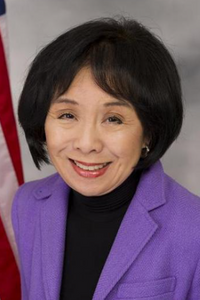
Democrat
Mai Vang
The 2026 general election for California's 7th Congressional District features Democratic incumbent Doris Matsui facing a intra-party challenge from Democratic Sacramento City Councilmember Mai Vang under California's top-two primary system. The race hinges on a central contrast between Matsui's two decades of legislative seniority and record securing federal infrastructure funding versus Vang's call for generational change, anti-corporate progressivism, and Medicare for All. Major election handicappers—including The Cook Political Report, Inside Elections, Sabato's Crystal Ball, and DDHQ/The Hill—rate the district as Solid or Safe Democratic.
The pulse
updated Sep 16Healthcare
high salienceVang advocates replacing private health insurance with a universal Medicare for All system, whereas Matsui focuses on expanding the Affordable Care Act and lowering prescription drug costs through Medicare negotiations.
Democratic Doris Matsui
Supports ACA and expanding Medicare benefits
Matsui supports strengthening the Affordable Care Act and leveraging Medicare to lower healthcare costs for families and seniors. She championed Inflation Reduction Act provisions that allowed Medicare to negotiate prescription drug prices, capped monthly insulin at $35, and limited out-of-pocket drug costs. Additionally, she leads efforts to expand telehealth coverage and modernize mental health care infrastructure.
- Helped pass and protect the Affordable Care Act.
- Supported Inflation Reduction Act provisions capping insulin at $35/month and setting a $2,000 out-of-pocket prescription drug cap for Medicare beneficiaries starting in 2025.
- Co-led the bipartisan CONNECT for Health Act and Protecting Access to Post-COVID-19 Telehealth Act to permanently expand telehealth access in Medicare.
- Authored the FASTER Act requiring federal sesame allergen labeling on packaged foods.
“The Affordable Care Act (ACA) not only opened up access to health insurance for millions of Americans, it also improved the quality of insurance, providing new consumer protections and cost savings.”
Democratic Mai Vang
Supports Medicare for All
Vang advocates for enacting a universal single-payer healthcare system through Medicare for All. She argues that federal policy must eliminate corporate healthcare profiteering and guarantee high-quality healthcare to all residents regardless of income.
- Explicitly commits to passing Medicare for All legislation in Congress.
- Pledges to challenge pharmaceutical and health insurance industry influence in federal policymaking.
“pass Medicare for All, take on the billionaire class, and finally protect our communities from the Trump administration.”
Economy and working families
high salienceVang positions herself as an outsider opposing corporate interests and directing targeted investments to working-class neighborhoods, while Matsui relies on her legislative record passing major national economic and tax reform bills.
Democratic Doris Matsui
Supports minimum wage increases and corporate taxes
Matsui supports strengthening the middle class by raising the federal minimum wage, closing corporate tax loopholes, and directing federal investments into local manufacturing and green energy. She voted for the Inflation Reduction Act to enact a 15% minimum tax on large corporations and impose taxes on corporate stock buybacks while stepping up tax enforcement on wealthy individuals.
- Voted to pass the Inflation Reduction Act establishing a 15% corporate minimum tax and taxing stock buybacks.
- Supports raising the national minimum wage to match rising living costs.
- Supported the American Rescue Plan Act, extending EIDL grants and PPP funding for small businesses.
- Pushed for federal funding from the CHIPS Act and Bipartisan Infrastructure Law to expand northern California clean energy and technology jobs.
“Rebuilding our economy and putting our region’s residents back to work remains my number one priority.”
Democratic Mai Vang
Opposes corporate influence and supports working families
Vang centers her economic campaign on resisting corporate and billionaire influence while delivering direct investments to working-class neighborhoods. As a Sacramento City Councilmember, she established local funding programs for youth and community development while rejecting council pay raises.
- Established the Sacramento Children's Fund while serving on the city council.
- Secured more than $40 million in targeted municipal funding for local neighborhood development.
- Declined pay raises while in local office and pledges to reject corporate PAC contributions.
“I’ve turned down pay raises and stood up to special interests because my only boss is you, not the billionaires and corporations.”
Governance and leadership
medium salienceVang calls for generational change to replace long-tenured politicians, whereas Matsui argues that her decades of federal seniority and committee leadership are crucial to securing regional benefits.
Democratic Doris Matsui
Emphasizes legislative seniority and bipartisan relationships
Matsui highlights her two decades of congressional experience and senior committee positions as necessary tools for securing federal funding and passing complex legislation. She argues her established relationships across the Democratic caucus and with Republican lawmakers allow her to deliver tangible regional results.
- Served in the U.S. House of Representatives since 2005.
- Holds senior roles on the House Energy and Commerce Committee and serves as Ranking Member of the Communications and Technology Subcommittee.
- Endorsed by California Governor Gavin Newsom and a majority of the Sacramento City Council.
“what I bring to the table is deep experience here and in Washington. I have strong relationships with members of my caucus, and I also understand what it is to work with the other side of the aisle.”
Democratic Mai Vang
Calls for generational change in Congress
Vang campaigns on replacing long-tenured incumbent politicians with a new generation of grassroots leadership. She argues that decades of establishment control have failed to deliver systemic solutions for working-class communities.
- Served on the Sacramento City Council since 2020 and SCUSD Board of Education from 2016 to 2020.
- Co-founded Hmong Innovating Politics to organize underrepresented communities.
- Challenged the incumbent incumbent on a platform of generational turnover and progressive action.
“the same career politicians have held onto power for decades without delivering the change we need”
Infrastructure and flood protection
medium salienceMatsui highlights multi-billion dollar federal funding for regional flood protection and transportation projects, while Vang points to her local record securing municipal community development funds.
Democratic Doris Matsui
Supports federal flood prevention and transit funding
Matsui has made securing federal flood control resources a cornerstone of her legislative career, bringing billions of dollars to northern California for levee upgrades and dam modernization. She also backed the Bipartisan Infrastructure Law to improve local bridges, light rail, public transit, and power grid resiliency.
- Secured over $3 billion in federal funding to strengthen regional levees and modernize the Folsom Dam spillway.
- Authored the POWER ON Act ($2.5 billion) in the Bipartisan Infrastructure Law to protect the electric grid against natural disasters.
- Authored the Healthier and Greener Schools Act ($500 million) for green infrastructure upgrades in public schools.
- Secured federal grants for regional bridge construction and public transit expansion.
“Doris secured over $3 billion to strengthen levees, modernize the Folsom Dam, and keep our families safe from catastrophic flooding.”
Democratic Mai Vang
Supports targeted municipal infrastructure investments
Vang emphasizes municipal neighborhood development and equitable resource distribution for local infrastructure. On the city council, she focused on direct investments in underserved district neighborhoods.
- Secured more than $40 million in municipal funding for local neighborhood development projects.
- Established a city-wide language access coordinator to ensure equitable access to municipal infrastructure and services.
“securing more than $40 million in funding for neighborhood development, and establishing a city-wide language access coordinator.”
Immigration and border security
low salienceMatsui focuses on congressional oversight of ICE detention facilities and voting against strict Republican border bills, while Vang stresses protecting local immigrant communities from federal Trump administration actions.
Democratic Doris Matsui
Opposes enforcement-only legislation and demands ICE oversight
Matsui advocates for humane immigration enforcement and rigorous congressional oversight of federal immigration agencies. She has conducted oversight visits to ICE facilities and consistently voted against Republican border and deportation bills in Congress.
- Toured an ICE detention facility to oversee detainee treatment after repeated access requests.
- Voted Nay on the Laken Riley Act (S. 5) and the SAVE Act (H.R. 22).
- Voted Nay on H.R. 875 (DUI deportation bill) and H.R. 2 (Secure the Border Act of 2023).
- Publicly criticized Department of Homeland Security management under Secretary Kristi Noem.
“Her rampant incompetence, wasteful spending, unprofessionalism and unconstitutional execution of her duties is only scratching the surface of her failures”
Democratic Mai Vang
Opposes Trump administration immigration crackdowns
Vang pledges to protect immigrant and working-class communities from federal enforcement crackdowns under the Trump administration. In local government, she enacted measures to expand language access services across municipal departments.
- Pledges to defend local communities against federal Trump administration actions.
- Established a city-wide language access coordinator during her tenure on the Sacramento City Council.
“pass Medicare for All, take on the billionaire class, and finally protect our communities from the Trump administration.”
Climate change and clean energy
medium salienceDemocratic Doris Matsui
Supports clean tech investments and federal climate programs
Matsui supports a comprehensive federal approach to combat climate change through investments in clean energy technology, electric vehicles, and urban forestry. She supported the Inflation Reduction Act's clean energy provisions and authors legislation to promote urban tree planting and grid hardening.
- Supported the Inflation Reduction Act's historic $369 billion clean energy investment package.
- Authored the TREES Act to fund urban tree-planting programs in under-resourced areas.
- Advocates for federal protections for old-growth and mature forests on federal lands.
- Secured Bipartisan Infrastructure Law provisions for EV charging networks, clean hydrogen, and water infrastructure.
“The Climate Crisis is an existential threat to our way of life – it is the defining challenge of the 21st Century.”
Technology and broadband
medium salienceDemocratic Doris Matsui
Supports domestic semiconductor production and Big Tech regulation
Matsui plays a prominent role in federal tech policy as Chair of the High-Tech Caucus and Ranking Member of the Communications and Technology Subcommittee. She led the CHIPS Act in the House to expand domestic semiconductor manufacturing and supports regulating Big Tech algorithms and expanding low-income broadband access.
- House Democratic lead on the CHIPS Act, securing $52 billion for domestic semiconductor manufacturing.
- Helped secure $42.5 billion for the Broadband Equity, Access, and Deployment (BEAD) program, bringing $1.86 billion to California.
- Supported the Affordable Connectivity Program providing $30/month broadband subsidies for low-income households.
- Introduced the Algorithmic Justice and Online Platform Transparency Act to prohibit discriminatory online algorithms.
“I’m proud to have led the CHIPS Act in the House. As the lead Democrat, I helped secure $52 billion in semiconductor investments that will boost our economy and strengthen national security.”
Education and student debt
low salienceDemocratic Doris Matsui
Supports student loan relief and Pell Grant expansion
Matsui supports federal efforts to reduce higher education costs and lighten student loan debt burdens. She supports administrative income-driven repayment options, codifying student loan relief, and doubling Pell Grant awards.
- Cosponsors legislation to codify the Biden-Harris administration's income-based SAVE Plan for student loan repayment.
- Cosponsors legislation to double federal Pell Grant awards for higher education.
- Supported the Every Student Succeeds Act (ESSA) to reform K-12 public education funding.
“Over 45 million borrowers in the United States collectively owe more than $1.75 trillion in student loan debt. This is a crisis that prevents people of all ages from saving, owning a home, and living fulfilling lives.”
Prediction markets 2
updated Sep 16Polymarket ↗
CA-07 House Election Winner
Kalshi ↗
CA-07 House winner?
Prices are the market's latest daily close, expressed as an implied win probability. Follow a source link for live prices and volume.